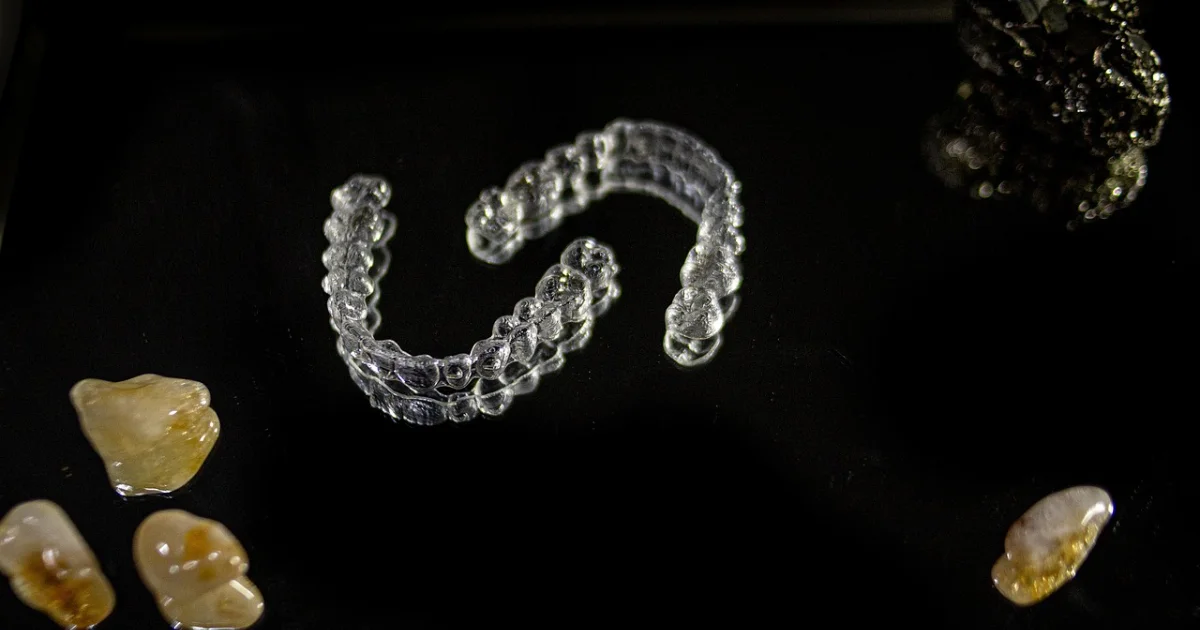
Clear aligners are removable, nearly transparent trays that move teeth gradually into a planned position. You wear one set of trays at a time and change to the next set in a planned sequence. They suit many cases, but not all of them. Whether they are an option for you is decided by an orthodontist after an examination, never from a description or a photo alone.
How aligners move teeth
Each tray is shaped to differ very slightly from the current position of your teeth. When you wear it as instructed, it applies gentle, controlled pressure, and the teeth move a small step. The next tray continues the movement. The planned sequence, and the length of treatment, depend on the case.
What usually happens
- Records and planning. Examination, photos, scans and X-rays. The orthodontist explains the options, the expected length of treatment and any preparation needed.
- Starting treatment. The aligners are delivered with clear instructions for wear and care.
- Progress checks. Some checks can be done remotely with photos; others need a visit. The treatment plan should state which.
- Finishing and retention. Final adjustments, then retainers to keep the teeth in their new position.
Treatment usually takes many months. The exact timing is confirmed by your orthodontist.
What is expected of you
- Wear the aligners for the number of hours your orthodontist asks, and change trays on schedule.
- Remove them to eat and drink anything other than water, and clean your teeth before putting them back.
- Clean the aligners as advised and keep them in their case when they are out.
- Wear your retainers exactly as advised afterwards. Teeth can move back if they are not worn.
Aligners or fixed braces?
- Clear aligners: removable, and suit many, but not all, cases.
- Fixed braces: brackets bonded to the teeth, often chosen for more complex movements.
Some tooth movements are more predictable with fixed braces. Your orthodontist will explain which approach fits your situation.
Possible risks
- Teeth often feel tender for a few days after each new stage.
- Poor cleaning around aligners can cause gum inflammation or white spots on teeth.
- Teeth can move back if retainers are not worn as advised.
- In a small number of patients, tooth roots shorten during treatment. This is monitored.
Active tooth decay or untreated gum disease is treated first. Situations that need jaw surgery alongside braces are also different.
Treatment and life abroad
If you live outside Turkey, ask how checks will be handled. A large part can often be monitored remotely, but some stages need an in-person visit. Ask for a written visit plan before you start, and ask which records your own dentist at home will receive.
Questions to ask any orthodontist
- Are aligners suitable for my case, or would another method be more predictable?
- How long is treatment expected to take, and how many checks are needed?
- Which checks can be done remotely, and which need a visit?
- What happens if a tray does not fit or a tooth does not move as planned?
- What will I wear afterwards to keep the result, and for how long?
- Who looks after me if I have a problem at home?
Where we fit in
LetsDentalSmile is a licensed dental practice in Istanbul. Read more on our orthodontics page. A remote pre-assessment is not a diagnosis; a plan is confirmed only after an examination.